Golden Buzzaround EX review: a travel scooter that rides like a bigger one
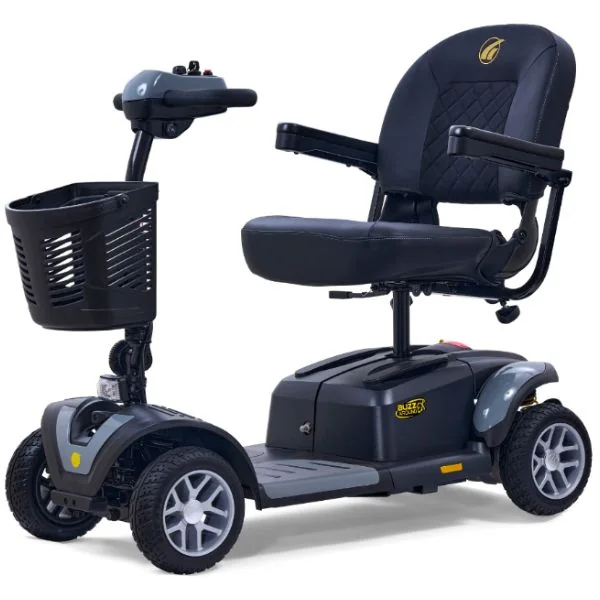
A travel scooter that rides like a bigger one. Front and rear suspension, four inches of ground clearance and 18 miles of range make it the smoothest take-apart scooter here, with a higher 350 pound capacity. The tradeoff is weight: the heaviest piece is around 53 pounds.
Check price at Golden Technologies →- Front and rear suspension smooth out cracks
- Up to 18 miles of range
- 350 lb weight capacity
- 4 in ground clearance clears small bumps
- Bright LED lighting
- Heaviest piece is about 53 lbs to lift
- One of the pricier travel scooters
- 5 mph top speed
- Bigger and heavier than a basic travel model
The cheaper travel scooters feel every crack in the sidewalk, and that single complaint is what sends people to my desk asking about the Golden Buzzaround EX. It is a 4-wheel travel scooter, so it still comes apart for the trunk, but Golden added front and rear suspension and a bit more ground clearance. You notice the difference the moment you roll over a driveway lip or a bumpy parking lot.
At around $1,839 it costs more than a basic travel model, and it weighs more too, so this review answers one question: is the smoother ride and the longer range worth the extra money and the extra heft? For a lot of riders the answer is yes. Not for everyone. Below I lay out exactly who I would put on this scooter and who I would point toward something lighter.
What the suspension actually does for your day
Most travel scooters skip suspension to save weight and money. The seat sits more or less straight on the frame, so a seam in the concrete or a thick door threshold travels right up into your hips and lower back. Riders with arthritis, a sensitive spine, or skin that bruises easily feel those little jolts add up over one trip to the store.
The Buzzaround EX has both front and rear suspension. There is give built into the wheels at both ends, so the body of the scooter and your seat soften the hit instead of slamming over every bump. Add the 4 inches of ground clearance, which beats many travel scooters, and the machine handles uneven sidewalks, grass at a picnic, and the carpet-to-tile transition without rattling you.
This is still a travel scooter with smaller wheels than a full-size machine, not an off-road buggy. It smooths out everyday surfaces well. It will not flatten a gravel trail or a steep curb. Riders whose daily routes include rough ground should look at my outdoor scooter picks instead, since that is a different category of machine.
Range and the bigger weight limit
The Buzzaround EX is rated up to 18 miles on a charge. Treat that as a factory ceiling rather than a promise, because real-world miles run lower once you load the scooter and ride it on anything but flat smooth ground. My battery guide spells out exactly how much each condition shaves off and how to keep the pack healthy. Even discounted, 18 miles gives you real breathing room. Most riders charge overnight, stop second-guessing whether they will make it back to the car, and rarely push the battery to empty, which is gentler on it over time.
Weight capacity is 350 pounds, a step up from the common 300 pound travel scooters. That cushion matters more than people expect. A larger rider, or anyone who carries a bag, a coat, and a few groceries on the lap, wants to sit comfortably under the limit instead of right at it. Riding near the top of a scooter's rating tends to drain range, sap climbing power, and shorten the life of the machine. Anyone who needs more headroom than this should see the sturdier options on my heavy-duty page.
The catch: it is heavier than a basic travel scooter
Weight is where I slow people down. The Buzzaround EX comes in at about 161 pounds total and separates into 5 parts for the trunk. Plan around the 53 lb section, not the 161 lb total, since the heaviest single piece is the one a person actually lifts. The full reasoning, with a model-by-model table, lives on my weight and size guide.
Fifty-three pounds is a lot for many older adults and many caregivers to hoist over the lip of a trunk, day after day. I have watched strong, healthy family members strain on a piece in that range. Before you fall for the ride, run an honest test: who loads it, how often, and can that person lift roughly 53 pounds at an awkward angle without hurting their back? When the answer is shaky, this is the wrong scooter, or you will want a lift or a hitch carrier on the vehicle.
Lighter travel models break into smaller chunks. The Pride Go-Go Elite Traveller 2 has a heaviest piece around 35 pounds, and the EV Rider Transport AF+ folds in one piece at just 49 pounds total. You give up the plush ride and the long range to get there, which is the exact tradeoff this review keeps circling back to.
Comfort, lighting, and the small touches
Beyond the suspension, the Buzzaround EX is simply a more comfortable place to sit for a while. The seat is roomier than the bare-bones budget scooters, and the controls are laid out plainly, which I appreciate for riders who do not want to fuss with settings. Top speed is 5 mph, a sensible walking-plus pace that suits how this scooter actually gets used; my how to choose guide explains why turning and transport shape your day far more than that number.
One feature I genuinely like is the bright LED lighting. Riding at dusk, through a dim parking garage, or down a poorly lit apartment hallway, being seen matters for safety. A lot of travel scooters give you nothing or a token light. The EX does better here.
On maneuvering, this is a 4-wheel scooter, so it stays steady and stable, which is what most riders want for confidence. The cost is a wider turning arc than a 3-wheel model, so tight kitchens and narrow store aisles mean a little more backing up and repositioning. Anyone with a cramped home should read my 3-wheel versus 4-wheel comparison before deciding, because that one choice shapes daily life more than the badge on the front.
Who I would put on the Buzzaround EX
This scooter earns its price for a specific person. After fitting riders for years, here is who I happily recommend it to:
- You want a smoother ride and your back demands it. Anyone who has felt every bump on a cheaper scooter and hated it gets the fix here.
- You go places and stay out a while. The 18 mile range covers long days at a mall, a market, a fairground, or a campus without range anxiety.
- You are a larger rider or you carry things. The 350 pound capacity gives real headroom.
- You have help loading, or a vehicle set up for it. Someone fit can manage the 53 pound piece, or you have a lift or carrier.
I would point you elsewhere when you live alone and load the scooter yourself with limited strength, since the pieces are heavy and nothing auto-folds. Frequent flyers run into the same wall. A lighter machine is the kinder choice in those cases. To weigh all of this in order, my how to choose guide walks through it step by step, and you can see where the EX lands among my top picks for seniors.
How it compares at a glance
It helps to see the Buzzaround EX next to the lighter travel scooters people often shop against. Notice how the EX trades portability for ride quality and range.
| Scooter | Range (up to) | Capacity | Heaviest piece | Suspension |
|---|---|---|---|---|
| Golden Buzzaround EX | 18 mi | 350 lb | about 53 lb | Front and rear |
| Pride Go-Go Elite Traveller 2 | 13.8 mi | 300 lb | about 35 lb | None |
| Drive Medical Scout | 9 mi (15 with extended battery) | 300 lb | splits into pieces | None |
| EV Rider Transport AF+ | 10 mi | 250 lb | 49 lb (one piece, folds) | None |
When the heaviest piece is your sticking point but you still want comfort, you usually cannot have both. Lighter pieces come from lighter scooters, and lighter scooters ride firmer. The EX is built for the rider who picks comfort and has a plan for loading it.
Check current pricing and any bundle or free-shipping deals from a trusted mobility retailer. Prices move with sales.
Affiliate link. We may earn a commission at no extra cost to you. It never changes our rankings (see how we test). We are not a medical provider; for a prescription scooter, talk to your doctor.
Frequently asked questions
Is the Golden Buzzaround EX hard to put in a car trunk?
It comes apart into 5 pieces, so it fits in most trunks, but be realistic about the weight. The piece that matters is the heaviest one at around 53 pounds, since that is the part someone lifts over the trunk lip every single time. The 161 pound total only applies when the scooter is whole. When the person loading it cannot comfortably handle roughly 53 pounds, consider a lighter travel scooter or a vehicle lift instead.
How far can the Buzzaround EX really go on one charge?
It is rated up to 18 miles, which is a best case rather than a guarantee. Plan on noticeably less in tough conditions, and not draining the battery to empty each day actually helps it last. The good news is that 18 miles still leaves most riders plenty of cushion for normal errands and outings. My battery guide covers what trims real-world range and how to care for the pack.
Is the Buzzaround EX worth the extra cost over a basic travel scooter?
It depends on what you value. A firmer ride that bothers your back, a wish for longer range, or a higher weight limit all make the suspension and the 18 mile rating worth the extra money. Riders who mainly need the lightest possible scooter to load alone may be better served by a cheaper, lighter model. My cost guide breaks down what you are paying for at each price level.
Will Medicare pay for the Golden Buzzaround EX?
I am not a doctor and the rules here are strict, so take this as general background only. Medicare Part B may help with a power scooter when a doctor prescribes it for a medical need inside your home and the paperwork is exactly right. Many comfort-and-travel scooters bought for outings do not meet that in-home standard, and coverage is never guaranteed. Talk to your doctor and your plan before counting on it, and read my Medicare overview for how the process generally works.
How do you test scooters like this one?
I look past the spec sheet at what matters in real life: how the seat feels after a while, how the suspension handles common bumps, how hard the heaviest piece is to lift, how tight it turns in a normal home, and whether the range holds up. You can read the full process on my how we test page, and learn more about my background on my author page.

I spent years helping older adults choose and fit mobility scooters, and I test these myself. I write every review and guide here, and I rank by what actually keeps a rider safe and independent, not by who pays the most. I am not a doctor. How we test →